


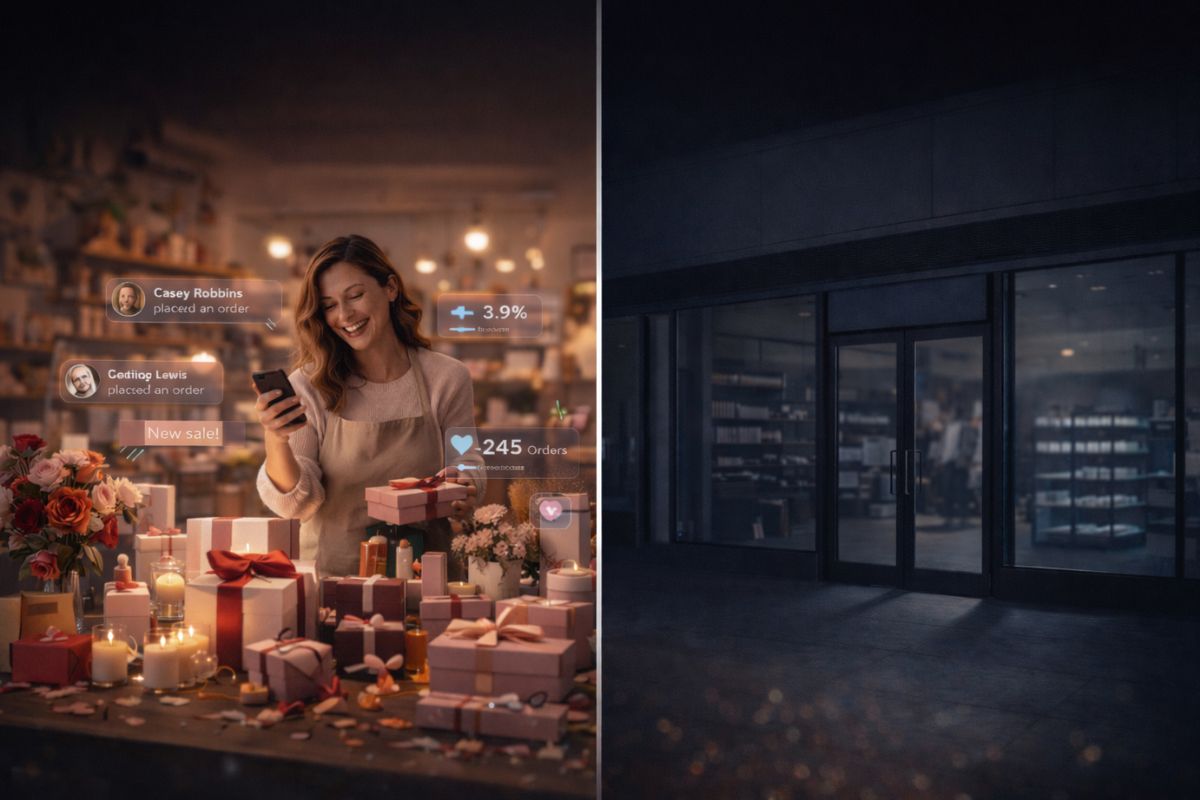
Every year, Valentine’s Day acts like a stress test for digital commerce. It compresses emotion, urgency, and expectation into a tight window where shoppers want things fast, easy, and meaningful. In 2026, that pressure test delivered an unexpected headline. Small and medium businesses did not just compete with big brands. In many categories, they beat them outright.
Across Canada and the United States, Valentine’s Day 2026 became a turning point that revealed how quickly the balance of digital power is shifting. Small businesses leaned into AI powered personalization, shoppable social media, and hyper local visibility while maintaining secure and reliable digital operations. The result was not just strong sales, but a public reminder that size no longer guarantees success in a digital first economy.
For big brands, it was a wake up call. For SMBs, it was proof that the playbook has changed.
Attention Lives in Feeds, and SMBs Went There First:
One of the clearest signals from Valentine’s Day 2026 was where the buying actually happened. It was not on traditional ecommerce homepages or banner ads. It happened inside feeds.
Short form video on platforms like TikTok and Instagram became the front door to commerce. Small businesses used native checkout, product tagging, and live shopping formats to turn casual scrolling into instant purchases. Customers did not have to think. They saw something they liked and bought it in seconds.
Big brands showed up too, but often late and cautiously. Their content felt scripted and overproduced. SMBs, on the other hand, felt spontaneous and real. That difference mattered.
When attention is fragmented and fleeting, speed and authenticity win.
AI Personalization Quietly Did the Heavy Lifting:
Behind the scenes, artificial intelligence played a major role in separating winners from laggards. The difference was how it was used.
Small businesses treated AI as an operational layer, not a gimmick. Personalization engines adjusted messaging based on timing, intent, and past behavior. A last minute shopper saw urgency and simple bundles. An early planner saw inspiration and curated sets. A customer shopping for themselves saw something completely different.
This was not about sending more messages. It was about sending fewer, better ones.
Big brands often relied on broad segments and fixed campaigns. SMBs adjusted in real time. That flexibility translated directly into higher conversion rates during the most time sensitive shopping days of the year.
Social Commerce Became a Sales Channel, Not a Test:
For years, social commerce was treated as an experiment. Valentine’s Day 2026 confirmed it is now infrastructure.
Live shopping sessions created urgency and trust. Viewers asked questions, saw products in real time, and purchased without leaving the app. Shoppable short videos removed friction entirely. The buying path was clear, fast, and intuitive.
Small businesses benefited from flatter decision making and closer proximity to customers. They could adjust offers mid stream, respond to comments instantly, and pivot creative based on what was resonating.
Big brands struggled to match that agility. Approval cycles and rigid messaging slowed them down at exactly the wrong moment.
Nano Influencers Outperformed Big Names Again:
Another trend that solidified on Valentine’s Day was the power of nano influencers. These creators, often with fewer than ten thousand followers, consistently outperformed larger accounts when it came to trust and engagement.
Their content did not look like ads. It looked like real life. Awkward dates, thoughtful gifts, pet obsessed Valentine’s moments, and honest reactions resonated more than polished campaigns.
Small businesses partnered with these creators quickly and flexibly. Performance was tracked in real time, allowing brands to scale what worked and drop what did not. Big brands, locked into long term contracts, had far less room to adapt.
In a crowded digital landscape, trust travels faster than reach.
Hyper Local Search Captured the Last Minute Rush:
Valentine’s Day always creates a wave of last minute shoppers. In 2026, those shoppers went straight to search.
Queries like flowers near me, same day gifts, and Valentine’s dinner nearby surged in the final days. Small businesses that had invested in local SEO dominated those results.
Accurate listings, updated hours, real reviews, and location specific content paid off. Customers found what they needed quickly and converted with confidence.
Big brands could not compete on proximity. When shipping cutoffs passed, local won.
Digital Trust Turned Out to Be a Revenue Factor:
While marketing grabbed headlines, digital trust quietly determined outcomes.
High traffic events attract fraud, phishing attempts, and system strain. Businesses that entered Valentine’s Day with outdated infrastructure or weak security controls paid the price through downtime, failed checkouts, or customer hesitation.
SMBs that invested in basic cybersecurity and reliable systems barely noticed the noise. Secure payments, stable hosting, backups, and simple protections like multifactor authentication kept operations smooth.
Customers felt the difference. Trust translated into completed purchases and repeat visits.
In 2026, security is not just an IT issue. It is part of the brand experience.
Inclusive Gifting Expanded the Market:
Another reason SMBs outperformed big brands was their willingness to expand what Valentine’s Day meant.
Romantic gifts still mattered, but so did self care packages, friendship gifts, pet treats, and family focused bundles. These offerings captured demand that traditional campaigns ignored.
AI segmentation ensured relevance. Singles were not flooded with couple messaging. Friends saw playful alternatives. Pet owners saw something made for them.
The result was higher average order values and broader audience engagement without diluting the core message.
Data Guided Decisions in Real Time:
Measurement practices also evolved. SMBs focused less on vanity metrics and more on performance signals tied directly to revenue and retention.
Predictive analytics highlighted which channels and creatives were driving results, allowing owners to adjust quickly during the Valentine’s window. Decisions were made daily, sometimes hourly, instead of waiting for post event reports.
This responsiveness helped small businesses squeeze more value from limited budgets and adapt as customer behavior shifted.
Why Big Brands Should Pay Attention?
Valentine’s Day 2026 was not an anomaly. It was a preview.
The same forces that reshaped this holiday will continue to influence every major shopping moment. AI driven personalization, social commerce, local relevance, and digital trust are no longer optional. They are table stakes.
Big brands still have advantages, but only if they can move faster, integrate better, and sound more human. Scale without agility is becoming a liability.
What This Means for SMBs Going Forward?
For small businesses, the takeaway is both encouraging and demanding.
You do not need massive budgets to win. You need smart systems, authentic stories, and reliable operations. When those pieces come together, even the biggest retail moments are within reach.
Valentine’s Day 2026 proved that small businesses are not just surviving the digital shift. They are shaping it.
And for anyone still clinging to the idea that size guarantees success, this holiday delivered a clear message. The future belongs to the businesses that move fast, earn trust, and meet customers where they already are.






Comments are closed