


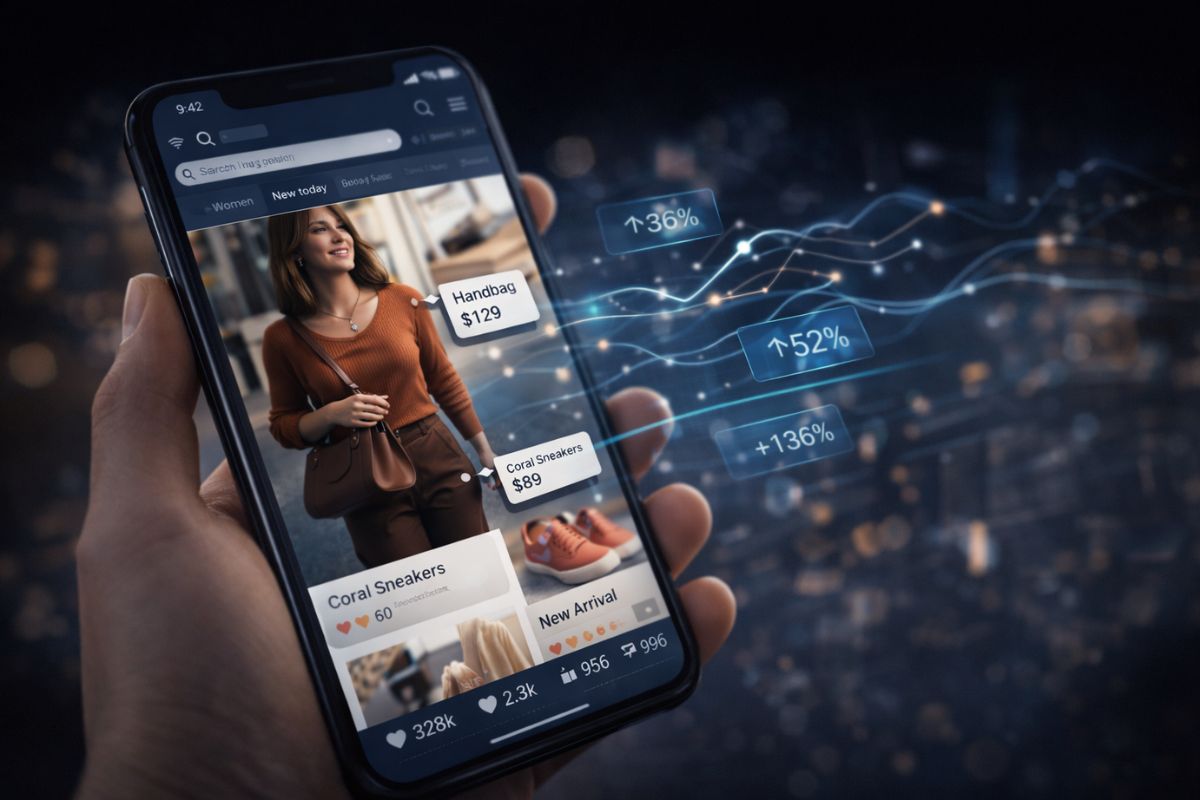
Something quietly flipped in digital marketing
If you blinked, you might have missed it. But sometime between rising ad costs, disappearing cookies, and nonstop platform changes, digital marketing stopped favoring the biggest spenders and started rewarding the fastest learners.
In 2026, small and medium businesses across Canada and the United States are no longer trying to copy big brand playbooks. They are rewriting the rules entirely. And they are doing it with a mix of artificial intelligence, short form shoppable content, and creators who feel more like neighbors than celebrities.
This is not a hype cycle. It is a structural shift in how attention turns into sales.
Big budgets stopped guaranteeing results:
For years, the formula was simple. Spend more, reach more, sell more. That logic made sense when feeds were less crowded and targeting was easier.
That world is gone.
In 2026, consumers scroll faster, trust less, and skip ads instinctively. Paid reach still exists, but it is expensive and unpredictable. Even well funded campaigns struggle to stand out when every feed looks the same.
Small businesses felt this pressure first. And instead of trying to outspend larger competitors, they adapted.
They got smarter about where attention actually converts.
AI personalization becomes the new baseline:
One of the biggest reasons small businesses are winning right now is how accessible AI has become.
Tools that analyze customer behavior, recommend content, personalize emails, and adjust timing are no longer enterprise only. They are built into everyday platforms that small businesses already use.
This has changed expectations.
In 2026, customers assume brands know what they care about. They expect emails that match their interests, offers that feel relevant, and experiences that do not start from zero every time.
Small businesses are surprisingly good at this because they already understand their customers. AI simply turns that understanding into scalable systems.
The result is fewer messages, better performance, and less wasted spend.
Short form video becomes the new storefront:
The most obvious shift in digital marketing is where buying happens.
Short form video is no longer just for discovery. It is where commerce lives.
Twenty second clips on TikTok, Instagram Reels, and similar platforms now combine storytelling, demonstration, and checkout in one place. Viewers do not need to leave the app. Interest turns into action instantly.
This format favors speed and authenticity over polish. And that plays directly into the strengths of small businesses.
Founders explaining why they built something. Employees showing how it works. Customers sharing honest reactions. These moments feel real because they are.
Big brands often struggle here. Their content feels staged. Small businesses feel human.
Shoppable scrolls collapse the funnel:
Traditional marketing funnels are built on multiple steps. Awareness, consideration, conversion, follow up.
Social commerce collapsed those steps into one motion.
In 2026, a viewer can see a product, understand its value, trust the person presenting it, and buy it in under a minute. There are no landing pages to optimize, no checkout forms to abandon, no retargeting loops to manage.
For small businesses, this is a breakthrough.
Every removed step increases conversion. Every friction point eliminated helps smaller brands compete on equal footing with much larger players.
Nano influencers outperform celebrities:
Influencer marketing did not disappear. It evolved.
Instead of chasing creators with millions of followers, small businesses are partnering with nano influencers, creators with under ten thousand followers who have strong engagement and real trust inside specific communities.
These creators feel relatable. Their recommendations sound like advice, not advertising. Their audiences listen.
For local shops, service providers, and niche brands, these partnerships often outperform traditional ads at a fraction of the cost.
It turns out influence is not about reach. It is about credibility.
Why small creators win attention:
There is a reason nano influencers work so well in 2026.
Audiences are tired of polished endorsements. They want context. They want honesty. They want to see products used in real life.
Small creators deliver that naturally. They are not trying to be famous. They are sharing things they actually use.
Small businesses understand this dynamic and build long term relationships instead of one off promotions. The result feels collaborative rather than transactional.
That authenticity converts.
Privacy rules changed the game for the better:
The disappearance of third party cookies and tightening privacy regulations caused panic across the marketing world. But for many small businesses, it turned out to be an advantage.
Instead of relying on tracking users across the internet, successful SMBs focused on first party data. Email lists. Loyalty programs. Reviews. Direct conversations.
This data is cleaner, more reliable, and permission based.
Customers who opt in expect value. Small businesses tend to respect that relationship because it is personal.
In 2026, privacy compliance is not just a legal requirement. It is a trust signal.
Hyper local SEO quietly drives results:
While social platforms dominate headlines, search behavior is also shifting in favor of small businesses.
Voice search, mobile queries, and AI driven assistants prioritize relevance and proximity. Searches like near me, open now, or best nearby send motivated traffic directly to local businesses.
SMBs that keep listings accurate, collect reviews, and publish clear local content are showing up where it matters.
This visibility is often more valuable than national reach. Being found at the right moment beats being seen by the wrong audience.
Generative AI speeds up content without killing creativity:
Content creation used to be a bottleneck. Blogs, captions, visuals, and ads took time and money.
In 2026, generative AI handles the heavy lifting. Drafts are created quickly. Variations are tested. Visuals are produced on demand.
This does not replace creativity. It removes friction.
The brands seeing the best results are the ones with clear voices and values. AI helps them move faster, not sound generic.
Content without substance still fails. AI just reveals it sooner.
Predictive analytics replace guessing:
Another quiet advantage for small businesses is access to predictive analytics.
Modern tools show what actually drives sales. Which videos convert. Which creators influence buying. Which channels underperform.
Instead of debating strategy, SMBs adjust based on data. Budgets move in real time. Experiments run continuously.
This speed of learning compounds.
Large organizations often analyze after the fact. Small businesses adapt in the moment.
Marketing becomes more human again:
Despite all the technology, the biggest trend in 2026 marketing is how human it feels.
Founder stories matter. Customer voices matter. Transparency matters.
Audiences reward brands that show up honestly and consistently. They punish those that feel manufactured.
Small businesses have always been good at this. Technology is finally catching up to support it.
Why this matters right now?
Economic pressure has made every marketing dollar count. There is no room for lazy campaigns or vanity metrics.
The businesses winning in 2026 are not louder. They are clearer.
They use AI to personalize, creators to build trust, and shoppable content to convert attention into revenue quickly.
They respect privacy, focus locally, and measure what matters.
Small businesses are not catching up, they are leading:
The most interesting part of this shift is that small businesses are not following big brands anymore. Big brands are scrambling to imitate what small businesses figured out first.
Agility beats scale. Trust beats polish. Relevance beats reach.
AI meets influencers. Content meets commerce. And small businesses are cashing in.
Not because they found a shortcut, but because they learned faster than everyone else.
In 2026, digital marketing does not reward size. It rewards clarity, speed, and authenticity.
And right now, small businesses have all three.






Comments are closed